Does An Ice Bath Help With Recovery From A Hard Workout?


iceberg

Code icebergs from Gabriel Weinberg’s Blog - click figure for link to blog.


Hi folks,

My eldest son asked the other day whether an ice bath really helps with recovery from a hard workout, or is just another form of masochism. In my experience, an ice bath or a cold bath can help a great deal. Some argue that the ice isn’t necessary, and for shorter workouts I suspect that this true. For hard sets I find that an ice bath really helps. For instance, as I approach race season and my training is picking up, one of my favorite workouts is an 80-mile bike ride followed by a 10-mile run, as a brick (workouts are back to back with rapid transition off of the bike into the run). This set leaves your legs boiling hot, and ready for a cool down. Here is the FitOldDog recipe for an ice bath:

Equipment: bath of cold water, two large bags of ice, a stop watch.

Method: sit in the cold water (keeping you shorts on can be good, but I won’t explain why), tip in the two bags of ice, stir, start the stop watch for 15 minutes, move the water around regularly to improve heat flux (out of you into the water), when the alarm goes off, by which time the ice is long gone, EAT!!!!

Sound like fun? This is clearly a key component of any program of safe exercise for better health. The next day you’ll really reap the benefits of less soreness in your legs - I do anyway.

-k @FitOldDog

 Important Note: These posts do not provide medical advice. You should always consult your physician before undertaking or significantly modifying an exercise program.

Post Footer automatically generated by wp-posturl plugin for wordpress.

Share
Posted in Body Awareness, exercise and health, Exercise Tips, recovery | Tagged , | 5 Comments

Give Elastic Laces A Real Try Plus Kids Provide A New Perspective On The Use Of Yoga Toes


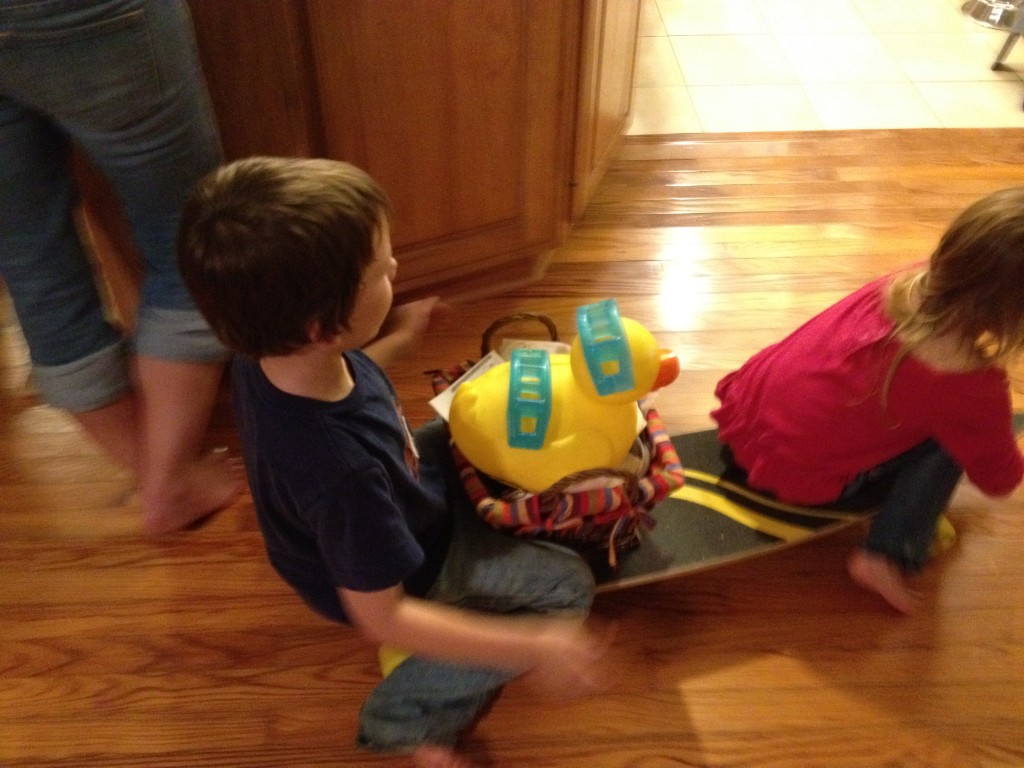
Kids give new meaning to Yoga Toes

Yoga Toes clearly speak to kids, and maybe it is because they seem so edible (like gummy bears), but why they had to be placed on our rubber duck in just this arrangement I never could determine - they seemed really sure about it, adjusting them meticulously as they played for hours with this long board/basket of stuff/rubber duck/Yoga Toe vehicle.

Hi folks,

Kids really are interesting, especially with respect to how they use their imaginations to create whole worlds in their heads (and chaos around them). If you stay young at heart you can do this too, but it is not so easy when you are worrying about paying the mortgage, feeding the children, or just getting some sleep, for heaven’s sake. Fortunately, my running shoes were not available to be hijacked into this game, as they were on my feet.

I would like to make a brief comment concerning my running shoes (which I wear all the time, when not in flip flops), about which I wrote at length in a previous post on ‘Running Shoe Secrets for Happy Feet.’ I made the following comment on elastic laces:

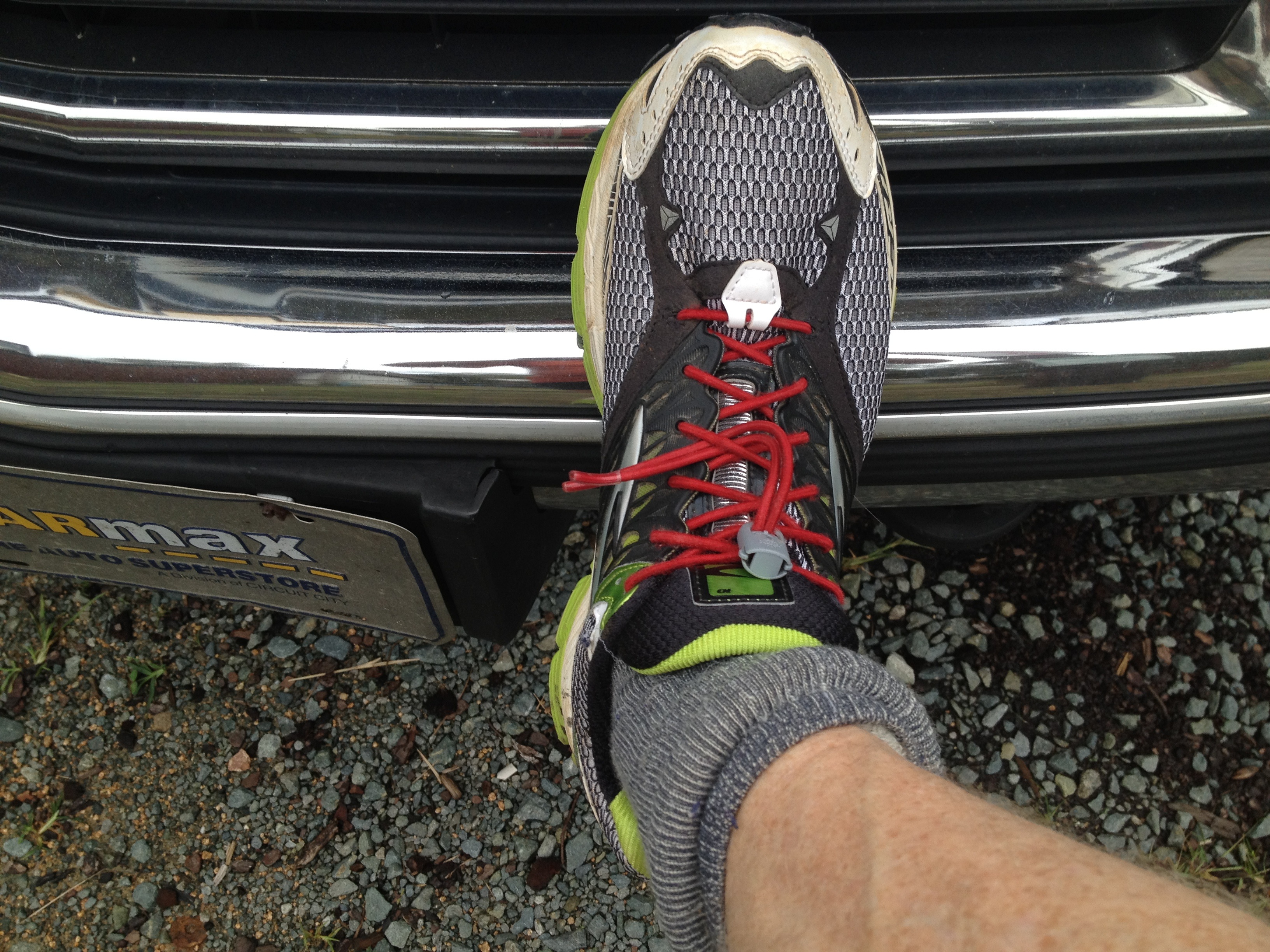
FitOldDog says give elastic laces a real try.

Elastic laces work really well, but you have to carefully adjust them for a few weeks of use, then they stay in place for ages.

“Elastic laces – when you have a stone in your shoe, off they come in a trice, stone gone, and on you go. Furthermore, I find that elastic laces are more comfortable than standard laces, probably because of the elasticity, but YOU MUST FIT THEM CAREFULLY, which takes time at first and may need the odd adjustment for a few weeks.”

Since then several people have informed that they tried elastic laces and didn’t like them. I wondered if they tried hard enough? Interestingly, I just purchased a new pair of running shoes, and of course I included elastic laces, which reminded me of the time it takes to get them adjusted ‘just so.’ I wish to encourage people to be patient with the settling in period. For the best performance, elastic laces require quite a bit of attention initially. This settling in period can take a month or more, but once achieved you can forget them entirely, and reap the benefits of ready stone removal and general shoe comfort that they provide.

So, as you undertake a program of safe exercise for better health that involves running, consider getting to know your elastic laces with patience and understanding. They’ll be your friends for ages - and YES! I do run in the same shoes for years, if they don’t fall apart first. I just change out the arch supports as they go flat, from time to time, but I’ve never needed to change the laces.

If those wonderful kids of Meg and Rick (my swim coach) had got to my shoes, I’m sure my laces would never have been the same again!

-k @FitOldDog

 Important Note: These posts do not provide medical advice. You should always consult your physician before undertaking or significantly modifying an exercise program.

Post Footer automatically generated by wp-posturl plugin for wordpress.

Share
Posted in equipment, exercise and health, Exercise Tips, Running | Tagged , , | Leave a comment

If You Want To Stay Young At Heart Hang Out With Kids Because They’ll Teach You How To Live


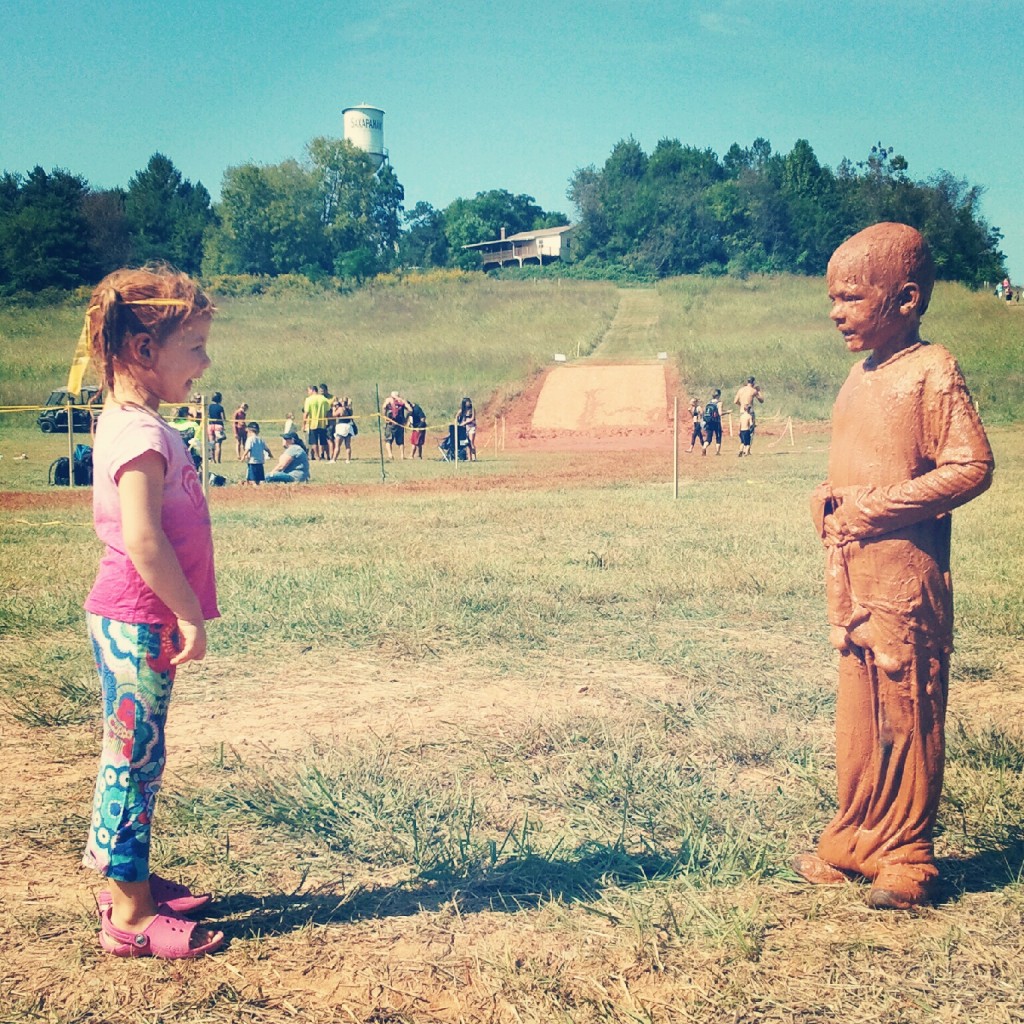
People you see at a mud run

Funny the things you see at a mud run. This one really made me laugh because both of these kids were covered in mud soon after this photo was taken. Photo by Meghan Truesdell.

Hi folks,

It is critical that the generations stay in touch with one another, each imparting the wisdom of their years to the others. Older people need to learn to watch what kids do and listen with their ears to what are saying, which means that ‘adults’ have to turn off their chattering (I know that already) minds, and truly listen. It is also critical for people over the age of 13 to realize that kids listen with their eyes. They don’t hear to what you say, they watch what you do. This is why the recent mud run, attended by my family and friends of all ages (see video in previous post), was such a great event. The kids really got involved, and when I say kids I mean kids from 3 to 60+ (inner kids!).

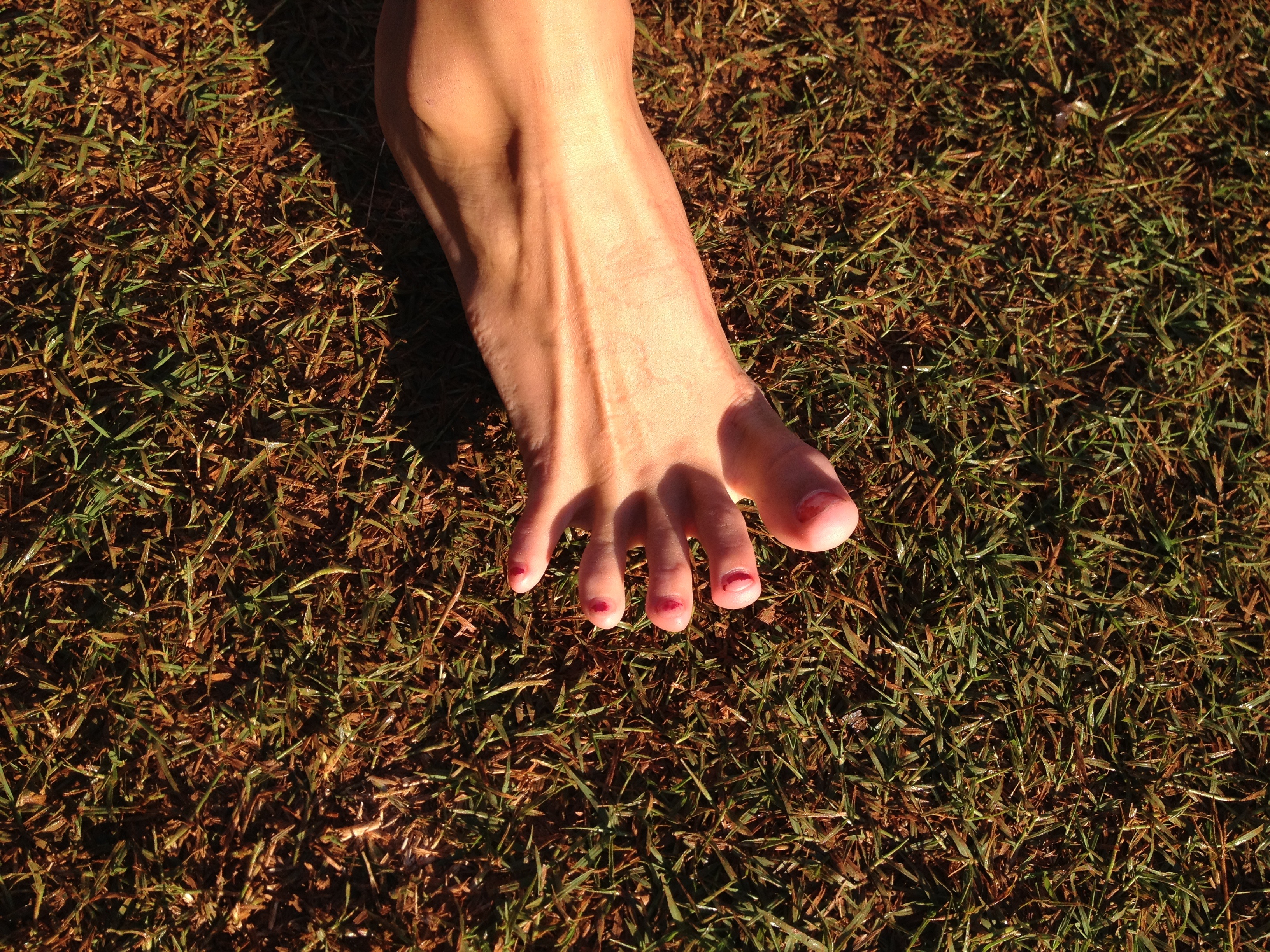
Kendall spreads her toes

Kendall (11) spreads her toes easily, which made me wonder if years of conditioning by the physical restraint of shoes encourage our feet to become essentially immobile lumps.

During the event I mentioned to a friend that this blog had been cited on the Yoga Toes Website, which brings great ‘link juice.’ This resulted in an immediate response of, “See what Kendall can do with her toes.” So Kendall (11) showed me toes that could be used as the poster child for active feet. Now when I use my Yoga Toes to wake up my feet, I think of Kendall’s amazing toes and strive to reach her level of foot mobility.

Then I started to worry that Kendall would lose this ability after stuffing her feet into shoes for the next 50 years. I hope not! I suspect that as a society we are slowly becoming more aware of biomechanical issues of this type. It might be a good idea to employ the wisdom of children whilst designing our clothes, furniture, and other aspects of daily life that have the potential to negatively impact our physical existence, and to slowly limit our mobility (for no apparently good reason!). In fact, I should bear this in mind as I develop my program of safe exercise for better health, especially for older people.

If in doubt, I’ll ask a kid, or better yet I’ll get my inner child to ask for me.

-k @FitOldDog

 Important Note: These posts do not provide medical advice. You should always consult your physician before undertaking or significantly modifying an exercise program.

Post Footer automatically generated by wp-posturl plugin for wordpress.

Share
Posted in awareness, exercise and health, Exercise Tips, motivation, Older Athlete, psychology | Tagged , , | 5 Comments

For Exercise Consistency Find Your Ideal Workout Motivator


Hi folks,

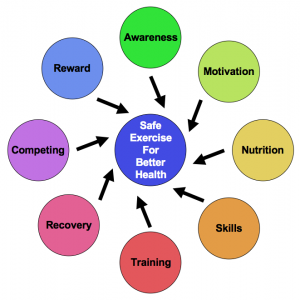
The FitOldDog Safe Exercise Wheel runs clockwise, starting at the top, with reward or celebration as a critical final component of each cycle.

Follow the Safe Exercise for Better Health Training Wheel to find your ideal workout plan. Click on figure for podcast.

I must start this post by apologizing to over 10,000 people for my failure to complete a post I wrote almost a year ago, entitled “How Do You Find Your Ideal Workout Plan?” That brief discussion of choices available in ‘workout guidance space’ fails to provide any guidance, but it promises to do so. I’ll correct that error now by attempting to more fully answer this difficult question.

I would proceed by following the FitOldDog safe exercise for better health exercise wheel, shown in the figure opposite. For a 15-minute podcast discussing this approach to training just click on the figure. At the same time you should explore what motivates you, more specifically which sport or physical activity.

First ask yourself “Who am I when it comes to exercise?” Don’t ask yourself who you were (e.g. high school jock), but who you are today (e.g. overweight middle-aged guy). Be as accurate and unforgiving as possible when you answer this question. Your response should include a list or diagram of your past injuries, as they may influence your ability to train, determine which exercises are safe for you, and whether you need to address guarding issues (see my blog post on Feldenkrais Fixed My Knee). If you start here, the chances are that you will select a program of exercise that is safe for you, personally. It is critical, however, to link your exercise program to a motivator. If you have a goal, towards which improved strength, vigor, and aerobic conditioning prepares you, you’ll be much more likely to be successful, which means consistent in your training.

Look at the world of physical activity and choose one you like. Then look into what it requires to be undertaken successfully and safely (as safe as possible, that is!). My eldest son, Nick, is a weight lifter and he chose kiteboarding - here is a brief videoclip showing what he achieved through several years of dedication to mastering the equipment, techniques, strength and agility needed to safely glide over the sea powered by the wind (magic).

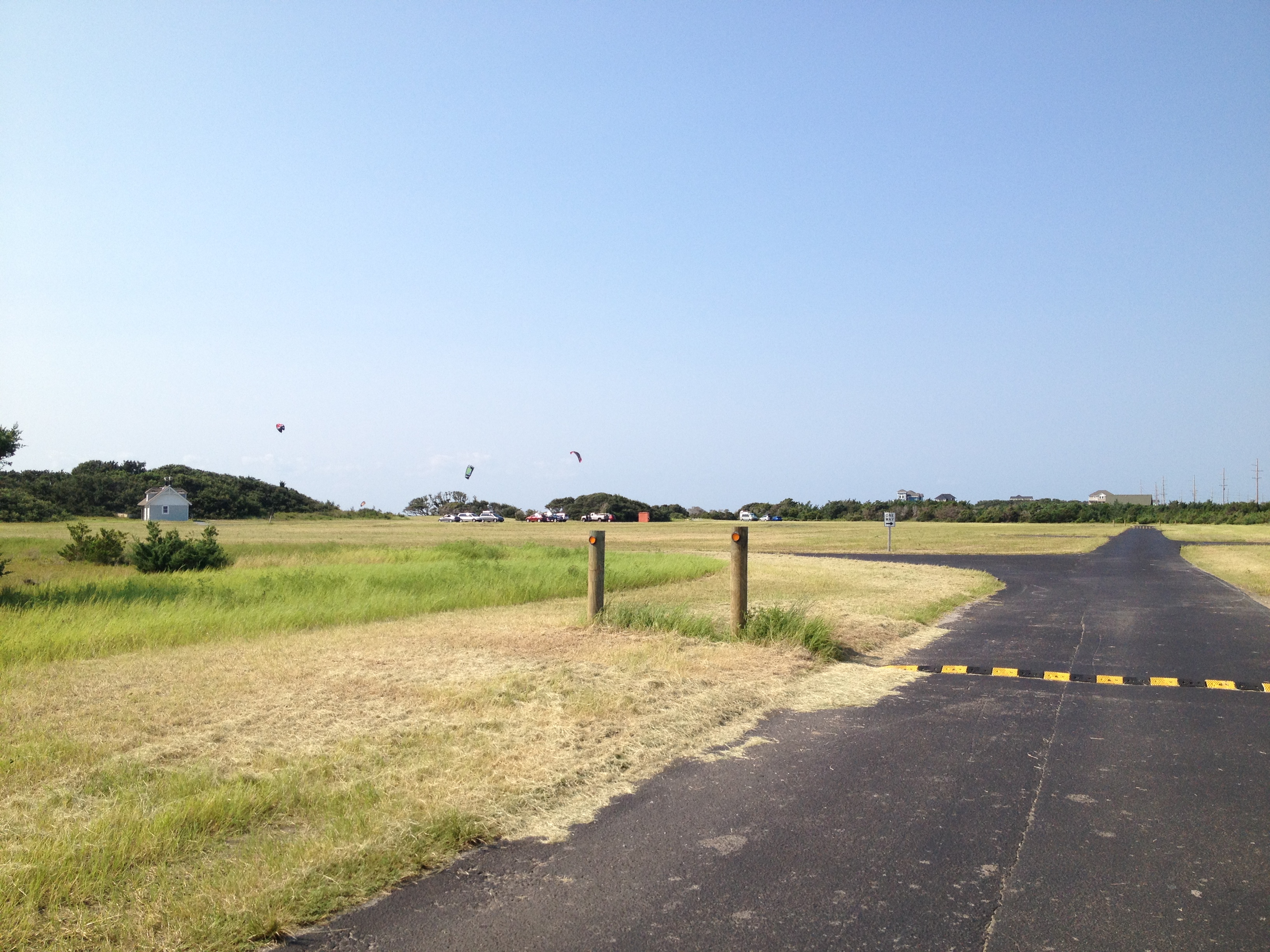
Running track near where my son kiteboards at the Outer Banks of NC USA

While Nick was playing on the waves out to sea, I ran about 10 miles around this asphalt ‘track’ in the hot sun, which goes to show that Ironman racing and training really is nuts, but I enjoy it. The reward is a seafood meal with my son on our way home from the beautiful North Carolina Outer Banks.

While Nick was kiteboarding, I ran around and around a nearby ‘track’ preparing for the New York City Marathon. To each his own is right. Alternatively, you might choose mud running, a latest craze, which does require strength, agility, and dedication to completing a challenging run, whilst working hard to become covered in mud. Here are my friends and Ironman supporters enjoying their latest race - I think I’ll do it next year, as it sure looked like they were having a great time, while I guarded their pile of clothes, towels and food. After the race was over, all the kids kept jumping into the mud pits, which I must admit was one of the most amusing sights I’ve seen.

I tend to be more solitary in my interests, so once we all got home from the mud run I went for a 15-mile trail run on my own, and had a great time, then we all met up at Johnny’s in Carrboro for post-race conversation. Now that was both a wonderful day and a great workout, don’t you think?

For all these sports you need to be aware of your body, train appropriately, have the right gear (running is easier than kite boarding by far, in that respect), allow yourself to recover, and most importantly reward yourself before going around the FitOldDog Safe Exercise for Better Health Training Wheel for another spin.

This process is appropriate for all levels of exercise, whether you hope to complete a Mall Walk or remain a gymnast into your 80s, or you are recovering from a health challenge, such as aortic surgery, heart disease, cancer or diabetes. Don’t compare yourself in this regard, just enjoy the activity that you choose and set goals to bring you the pleasure in life that is the reward for truly living one day at a time.

The sport or physical activity you enjoy will determine the nature of your ideal workout plan.

-k @FitOldDog

 Important Note: These posts do not provide medical advice. You should always consult your physician before undertaking or significantly modifying an exercise program.

Post Footer automatically generated by wp-posturl plugin for wordpress.

Share
Posted in exercise and health, Exercise Tips, FitOldDog Training Wheel, health challenged, motivation | Tagged , | 2 Comments

Training And Motivating Older Athletes – Guest Post For FitOldDog By Eamon Foley


The Senior Games helps to motivate older athletes.

by Tony Overman, The Olympian, via AP
“Art Turock, 62, left, of Kirkland, Wash., powers to the finish line July 28 in the men’s 50-meter dash at the Washington State Senior Games track and field competition in Tumwater, Wash.”

“At last you can improve significantly without floundering for hours. Cutting to the chase is really important.”

By Eamon Foley, triathlon coach, author of this guest post, and editor of The Holistic Triathlete

How do you get the most out of older athletes, given that as we age our recovery speeds diminish and conflicting priorities (career, family) mean we are less able to carry a heavy training load?

Do changes need to be made for older athletes? Definitely, but there is no magic formula for setting an older athlete’s training plan.

We do have to take into account relative recovery ability and injury risks but that does not mean arbitrarily reducing workloads as they get older. Rather than blindly reducing their workload relative to younger peers, focus on training smart and effectively, and getting the most out of each session. To pro-rate their training without due consideration for the athlete is ineffective (and patronizing) as many of them will be able and willing to endure a heavy workload.

So, how do you help the older athlete maximize their training?

Before you ever put pen to paper or fingers to keyboard, talk to them – they know what works for them and what doesn’t. Leverage that experience – it is more valuable than anything you bring to the table. What is their injury history? What do they enjoy? Find out what makes them tick and apply it. Generally, this is where older athletes have an advantage over younger pups – experience. They know their bodies and how to get the best out of themselves.

From these conversations, a properly planned and structured periodized training plan should arise. It will help manage workloads, ensure you get the most out of each and every session and prevent injuries, while taking into account the athlete’s goals.

My approach is to treat them like every other athlete and adapt their program to their circumstances. Just as you would coach a teenager differently to a thirty-something athlete, or Olympic and Ironman distance athletes, customize the plan to not just age but also experience, injury history, goals, time available, etc.
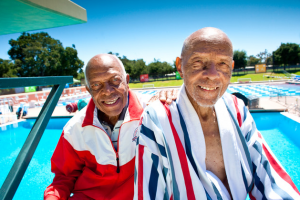
You're never too old to compete!

“Swimmers John and Bradford Tatum, age 88 and 90, are among the athletes profiled in the documentary “Age of Champions.”

Consistency – like any athlete, training consistently is vital. If you are trying to be clever and maximize the return on each practice, ‘a week here, a week there’ approach will not yield results and may lead to injuries. Do three sessions per week consistently, rather than six sessions per week with a week off.

Injury Prevention - within the training program and each session, due consideration must be given to injuries and their prevention. Given our increased susceptibility to injury as we age, the focus should shift to training smarter and devoting more time to activities that help us recover and ward off injuries. Full and proper warm ups and cool downs, stretching, core strength and managing training levels are all tools to do this. Solicit feedback from the athlete – how are they feeling, what are their aches and pains, and adjust accordingly.

Some people may feel they are not working hard enough and want a few more minutes of a tough set, but those minutes devoted to cooling down after a tough session are vital over the course of a long season. Train smarter, not harder, and the long-term benefits will be visible.

Recovery Time Rest and recovery are particularly crucial for masters athletes given muscles and energy systems take longer to recover as we age. Including sufficient recovery time (including days off and spacing between sessions) it will generally pay off with reduced incidences of illness and injury, allowing for more consistent training over the course of a season.

Technique is key for older athletes, and one of the most straightforward ways to improve performance. The investment in time is exponentially outweighed by the rewards.

We lose a significant portion of our strength over time, and many older athletes will not have the power of younger competitors to override poor technique through brute force.

While some athletes will want to stick with what they have always done, many enjoy the more cerebral activity of drill-work. It may have been a long time since they have tried something new or their athletic careers may have hit a plateau. Helping them develop efficient technique provides tangible results and encourages further progress. It engages them mentally, gives them visible progress markers and is inherently good, light aerobic work. Almost without fail, the athletes enjoy seeing improvements in technique and efficiency.

Reinforcing correct technique will also help prevent injuries, e.g. a lighter running foot strike. One particular example where technique pays off in huge efficiency gains across all three sports is employing the core. For example, posture on the bike and the run, using the core for hip rotation in the pool.

Goals and motivation: Just like everyone else, older athletes need goals. Do they want to race or just keep fit? Are they in it to meet people or to win their age group? This will help the coach write the plan and the athlete choose between training or visiting the grandkids. Whatever the approach, goals will help motivate and ensure the athlete enjoys their training.

All of the above topics apply to all (tri)athletes, but when coaching older athletes, the rewards from an extra focus on these areas are disproportionate. Managing workloads, improving technique and focusing on injury prevention will drive results faster than pounding out mile after mile while chasing volume.

Enjoy your training, older athletes,

Eamon Foley

 Important Note: These posts do not provide medical advice. You should always consult your physician before undertaking or significantly modifying an exercise program.


Post Footer automatically generated by wp-posturl plugin for wordpress.

Share
Posted in Body Awareness, coaching, Competing, exercise and health, Exercise Tips, motivation, Older Athlete, recovery, Training | Tagged , , , , | Leave a comment

Introductory Video Lesson On Yoga Toes From FitOldDog’s Continuum And Dance Teacher For An Endurance Athlete


Hi folks,

I recently published a blog post about the effect of Continuum training and yoga toes on the health of my feet and my shoe size. This generated some interest from Pauline, an endurance athlete who introduced me to the AAA Facebook Page, of which she was one of the creators. As the real key to the use of yoga toes is how they are applied, which requires some training, I asked Rebecca, my Continuum and Dance teacher if she would kindly prepare a short training video for Pauline, and here it is:

This is just an introduction to yoga toes. Try learning to use them whilst doing calf raises (correctly), balancing on a roller, then on a roller with one foot, then balancing on a roller not staring at the wall but moving your eyes and limbs freely. There is still plenty for FitOldDog to learn yet before he’ll be dancing lightly and freely on the Ironman race course.

Continuum, Feldenkrais, and other approaches to improved body awareness, should certainly be a part of any program of safe exercise for better health, as they improve posture, balance, flexibility, biomechanical efficiency, and your general attitude to your body as an endurance athlete.

The real trick is to find the right teachers and coaches, and then to do your homework.

-k @FitOldDog

 Important Note: These posts do not provide medical advice. You should always consult your physician before undertaking or significantly modifying an exercise program.

Post Footer automatically generated by wp-posturl plugin for wordpress.

Share
Posted in blogging issues, Continuum, equipment, Español, Feldenkrais, motivation, pharmaceuticals, psychology | Tagged , , , , | Leave a comment

Yoga Toes Made My Feet The Same Size


Hi folks,

Fifty (50) years ago I broke my right ankle in a motorcycle accident. Guarding (chronic psychosomatic tension) the broken bone (medial malleolus of the tibia), by folding my outer toes together and twisting my ankle laterally to take perceived stress off of the break, both shortened my foot and messed with my gait during running (that’s another long story). With the help of my Continuum teacher, Rebecca, and a pair of yoga toes, I have been stretching out these pesky toes and the outer edge of that foot, which was very tight indeed, which straightens my ankle.

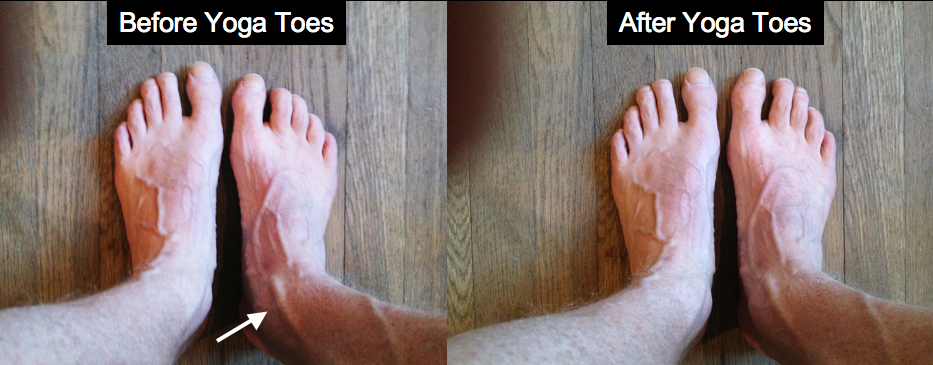
Effect of opening my feet with Yoga toes

Effect of opening my feet with Yoga toes - heels in same spot, the only difference being the spreading of my lateral toes, which were ‘scrunched up’ due to guarding to inappropriately protect a bone broken (arrow) 50 years previously on a motorcycle.

A few years ago I was measured for custom bike shoes by placing my feet in a casting mold, and my feet were found to be one complete size different (left size 11; right size 10). Since then I have been buying odd size shoes. The stretching of my outside right foot with yoga toes seemed to both widen and lengthen my right foot, to make it the same size as the left. Today, for the first time in years, I bought two running shoes of the same size (11), and they feel great, unless I scrunch up my right outer foot, when the right shoe feels too big.

I was looking at this blog post and the photo today, and I realized that it wasn’t very convincing, so I made a brief video that I think would convince anyone. Here it is:

How about that for progress in the development of my program of safe exercise for better health?

-k @FitOldDog

 Important Note: These posts do not provide medical advice. You should always consult your physician before undertaking or significantly modifying an exercise program.
Post Footer automatically generated by wp-posturl plugin for wordpress.

Share
Posted in Body Awareness, Continuum, exercise and health, Exercise Tips, injury | Tagged , , , | 8 Comments

Protective Muscle Reflexes And The Art Of Stretching Or Lengthening


“Stretching or lengthening is a conversation you have with a muscle, not something you do to a muscle.” FitOldDog, September, 2012, whilst talking to himself and running trails.

re·flex/ˈrēˌfleks/ Definition from Google:

Noun:
An action that is performed without conscious thought as a response to a stimulus.

Hi folks,

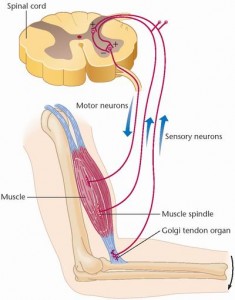
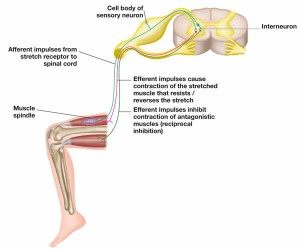
Muscle detection system for length and tension, proprioreceptors

Proprioceptors are muscle protection systems that determine length and tension.

I live with a nurse, as a result of which from time to time I receive random questions about how the body works or what a particular acronym might mean. I don’t mind my research background being used in this way as I learn a lot, some dredged up from the past and some looked up and entirely new. Recently, I was asked, “What does BNP stand for again?” I said, “Something Natriuretic Peptide,” but where my brain found that one I had no idea, and I’d completely forgotten what it did and what the ‘B’ stood for, except I suspected that the heart was involved, so off to Google! Yep, BNP is Type B Natriuretic Peptide, which is released by the major chambers of the heart, the ventricles, to protect these muscular pumps from being overstrained - when the load becomes too much they release the chemical BNP and this causes peripheral resistance in the circulation of blood to decrease, taking the load off of the heart before tears, strains and failure of this muscular pump should occur. This is a typical muscular protective reflex. The body is full of these systems, designed to keep the body machine working within safe limits. In the case of BNP, the reflex is chemical or hormonal.

Stretch reflex arcs and reciprocal inhibition prevent opposing muscle groups ‘fighting’ each other, and this is the basis of ‘Active Isolated Stretching.’

Each muscle in your body is provided with such local protective systems, including proprioceptors, neural (nervous system based) reflexes that reduce the risk of muscles being over stretched or subjected to undue strain, which would lead to tears and maybe severe damage. These reflexes underlie the method of Active Isolated Stretching (A.I):

“The underlying theory behind A.I. is that if a muscle is stretched too far, too fast, or for too long, it elicits a protective action known as the myotatic reflex, causing it to automatically and ballistically recoil in an attempt to prevent the muscle from tearing. This occurs about three seconds into a stretch.” Quote from an interesting article by Jim and Phil Wharton in Running Times.

An understanding of another important reflex which reduces the tendency of opposing muscle groups to ‘fight each other,’ is also one of the underpinnings of the logic behind Active Isolated Stretching, and again to quote from the article by Jim and Phil Wharton:

The other key to A.I. [Active Isolated Stretching] is to contract the opposing muscles to allow the target muscle to relax. For example, when stretching the hamstrings, the quadriceps muscles on the front of the leg are contracted, relaxing the hamstrings and making them more susceptible to stretching.”

As a serious enthusiast of the value of The Feldenkrais Method for athletes, especially older athletes, or people wishing to undertake a program of safe exercise for better health, I agree with what my instructor, Karen, told me, that our goal is to lengthen muscles not stretch them. Stretching implies force, and the very word will encourage the neophyte to apply too much force, which will lead to micro-tears that do more harm than good. It is much better to apply an understanding of the reflexes referred to above, than brute force.

Remember, after you learn to gently stretch or lengthen a muscle, any tightness that you are trying to fix comes from weakness. So make sure you strengthen the muscle to the level appropriate to the intended load. This is why weight room work is such a critical part of any training season.

-k @FitOldDog

 Important Note: These posts do not provide medical advice. You should always consult your physician before undertaking or significantly modifying an exercise program.
Post Footer automatically generated by wp-posturl plugin for wordpress.

Share
Posted in Body Awareness, exercise and health, Exercise Tips, Feldenkrais, Older Athlete, psychology, Running | Tagged , , , | Leave a comment

Of Fairy Rings, Your Training Base, And Why You Should Encourage Kids (Young And Old) To Exercise


Hi folks,

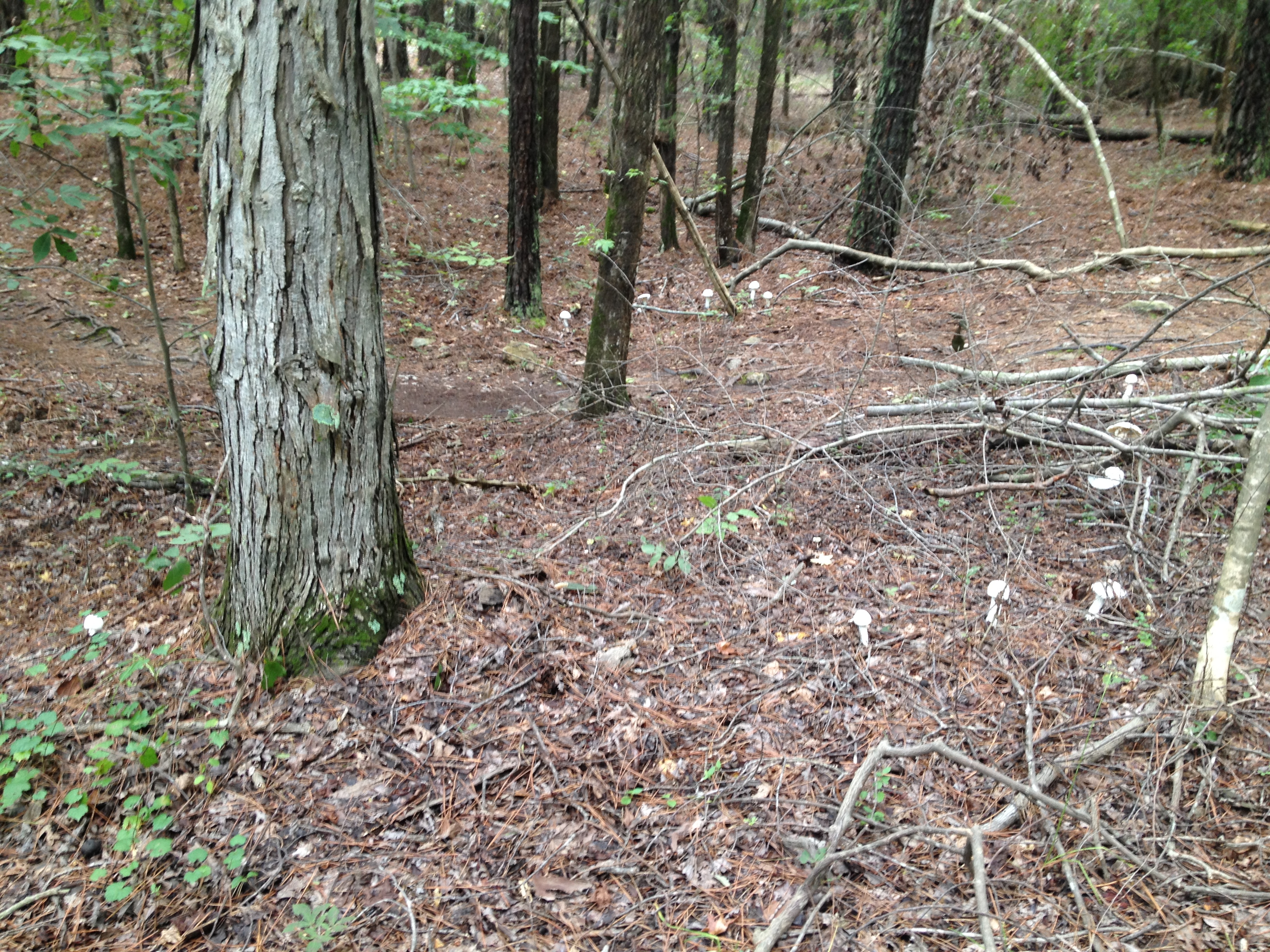
Fairy ring on a local running trail, photo by FitOldDog

A fairy ring on my local running trail, showing the outer limits of a hidden underground fungus, which extends under the trail, being about 20 feet in diameter and several inches thick beneath the soil.

From time to time you will hear athletes comment on someone’s training base, which refers to their training history, and the strength and skill it provides. We each come with a training or exercise base, both mental and physical, which is derived from our entire life history. If you’ve had it easy you will probably have a harder time with the ups and downs of life than people who have struggled. Why? Because they (their mind and/or body) have been there and know what it is all about, and they have developed strategies for dealing with things.

I think of a persons training base for athletics or exercise as being like a fungus, most of which is underground and unseen. At sports events you’ll be surprised who does well, as this is a more function of a person’s exercise history than how fit or fat they are that day. For instance, at the pool some really overweight person leaves you in their wake - ask them about their sports history and nine times out of ten they were college swimmers. You don’t stand a chance, however overweight they might be. This can also apply to runners and cyclists. You can’t tell a book (or a training base) by its cover.

So, when you walk your kids to school, take them for a hike instead of watching television, pull them away from the iPad to explore local trails or encourage them to join a local football team or take up some other physically active sport, you are giving them a great gift, the gift of a strong training base. My teenage years as a water polo player sure help me to enjoy the swim leg of Ironman races fifty years later. Many years of enjoying a range of sports has also helped me to appreciate the value of a life built around safe exercise for better health.

Build a good training base for your kids, and it won’t let them down. Finally, it is never too late to add to your training base, however old you might be.

-k @FitOldDog

 Important Note: These posts do not provide medical advice. You should always consult your physician before undertaking or significantly modifying an exercise program.
Post Footer automatically generated by wp-posturl plugin for wordpress.

Share
Posted in Body Awareness, Competing, exercise and health, Exercise Tips, motivation, Older Athlete | Tagged , , | Leave a comment

Don’t Expect Every Workout To Be Better Than The Last With A Note On Stretch Cords


Hi folks,

When it comes to endurance training or just safe exercise for better health, motivation is both critical and fragile, so beware. Today Rick and I had a standard 5000 yards of long pulls at the pool, but my times were off by 4-5 seconds/100 yards, and my lats were aching the whole time. It felt as though I wasn’t making any progress, but I’ve been there before, many times. This feeling was exaggerated by seeing my swimming partner and coach, Rick Fee, waiting for me at the end of each set as if he had been there for ages (which he had!). But I soldiered on because that is what you do. You don’t give up, you fight to make your sets, and then you chalk it up as another workout well done. You can’t expect to do better every time. This is just not realistic, because you will have ‘good days’ and ‘bad days.’

I attributed my sore lats to the fact that I have recently been doing Ricks killer stretch cord workouts - they sure exercise your shoulders and lats in addition to improving the final push component of your power stroke. I suspect that my recent addition of cord workouts left me tired, resulting in slower performance in the pool today (that’s my excuse, anyway). If I stick to it, I’ll adapt and my speed will return.

Go to this link to see Rick, my patient swim coach, demonstrating his stretch cord technique.

For beginners, a few poor workouts can be all it takes to cause them to throw in the towel - DON’T DO THAT! Better performances will come if you are patient. It is just a matter of training for a while on a plateau, and then all of a sudden your times improve when you least expect it, and then you settle in for a while at a higher plateau. That is just the name of the game.

The real key to all of this is consistency. Just do your workouts, for heaven’s sake, and you’ll do great if you persist.

-k @FitOldDog

 Important Note: These posts do not provide medical advice. You should always consult your physician before undertaking or significantly modifying an exercise program.
Post Footer automatically generated by wp-posturl plugin for wordpress.

Share
Posted in exercise and health, Exercise Tips, motivation, psychology, swim | Tagged , , , | 5 Comments