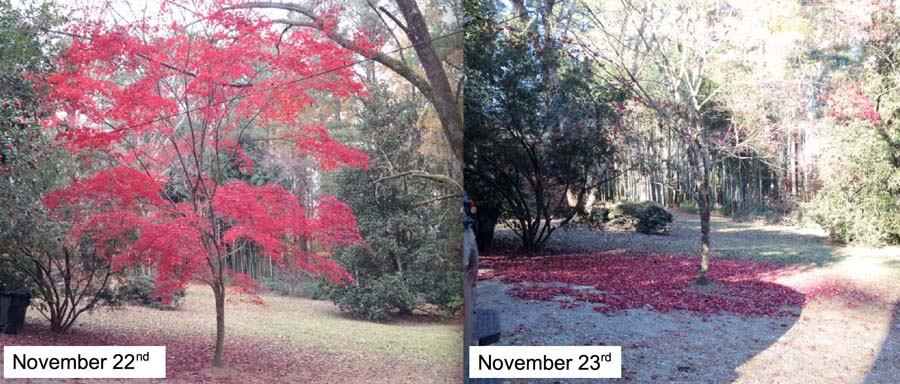
Each year countless cells die (due to apoptosis - programmed cell death) in the separation layer of the leaves of deciduous trees - I estimated in excess of 45,000,000 in the case of this beautiful Japanese Maple - life depends on death. The death of this year’s leaves permits new growth in the Spring.
“Men are born soft and supple;
dead, they are stiff and hard.
Plants are born tender and pliant;
dead, they are brittle and dry.
Thus whoever is stiff and inflexible
is a disciple of death.
Whoever is soft and yielding
is a disciple of life.
The hard and stiff will be broken.
The soft and supple will prevail.”
From the Tao te Ching by Lao-tzu, translated by S. Mitchell.
Hi folks, welcome to my thoughts.

Click heel for link to our Plantar Fasciitis Cure
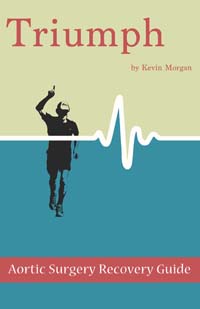
Being temporarily unable to exercise, I’ve been ‘enjoying’ (actually strongly disliking) a complete rest, not even being able to swim safely. My badly needed corrective aortic surgery is scheduled, so I’ll be back in training early next year. This rest has resulted in increased, rather than decreased, stiffness and soreness in my lower legs and feet, bordering on plantar fasciitis feelings in the early morning.
Clearly, the trick is to keep moving, as one’s body is either growing or dying, as that is the nature of biological systems. Having studied plantar fasciitis in some detail during the creation of our plantar fasciitis treatment product, this all makes sense when it comes to treating sports injuries, and the value of active recovery.
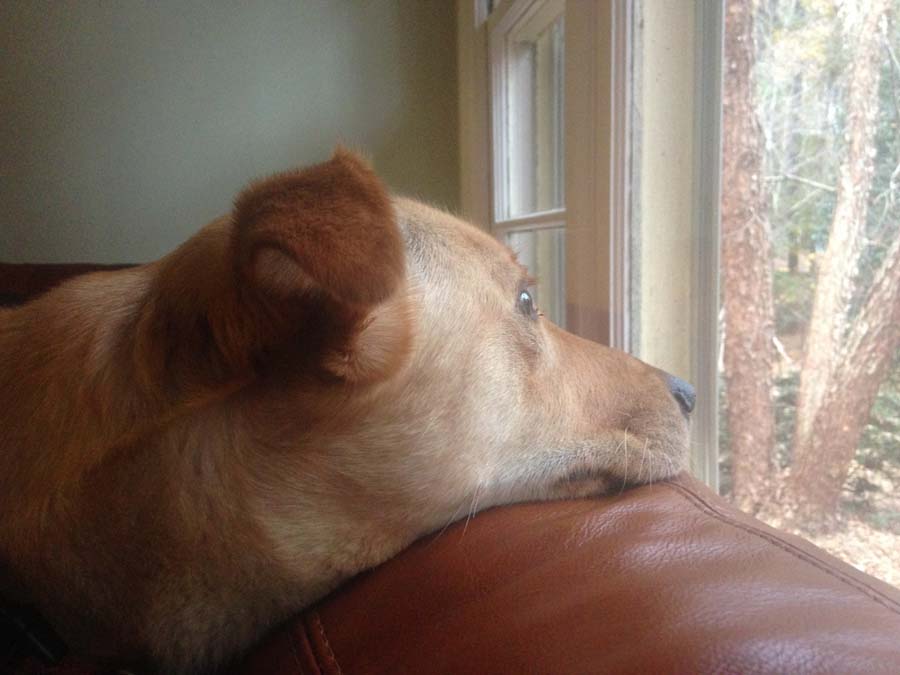
While I wish for successful aortic surgery, Willbe hopes that Pepe (little black dog) will come by to play. Hope seems to be important for us mammals.
The fluidity of loose connective tissue (fascia) depends very much on movement to convert the interstitial fluid from a semi-solid gel to the flowing sol (liquid) state, to keep things moving.
So, I’m back to careful stretching, gentle non-aortic aneurysm risky roller work, and even more long walks, all of which are reducing my lower leg stiffness in the mornings.
There is a lesson here concerning the amount of rest one should take during resolution of a sports injury, such as plantar fasciitis, and the general advantage of active over passive recovery.
If you have a sports injury don’t give up, my friends, never waste a day of your life, it’s too precious, and stay supple whatever you do!
-k @FitOldDog
Important Note: These posts do not provide medical advice. You should always consult your physician before undertaking or significantly modifying an exercise program.
Copyright © 2010 Kevin T. Morgan aka FitOldDog, Old Dogs in Training, LLC.
Post Footer automatically generated by wp-posturl plugin for wordpress.





It’s very true; our bodies want to be worked, to move, to be used. It’s hard to not be able to do anything. Gives one new perspective when seeing people who struggle with physical dis-abilities.
A new perspective, but driving me crazy. Happy Thanksgiving.