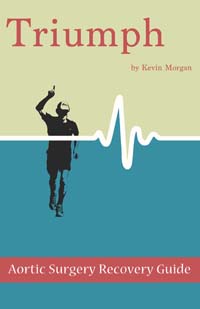

A book that helped me a lot!
I inserted the video above to remind you that your body is alive, it can repair itself given time, but you have to work with it for an optimal repair in terms of duration of the process and your satisfaction with the final outcome.
The first thing you have to do after a serious injury is survive the grieving process as quickly as you can, and get on with the work of recovery. Do this work in a playful manner - see it as an adventure, not a chore, because your body is listening to your thoughts and feelings. In fact, your body is having your thoughts, and especially your feelings. You can affect the outcome, so start by reading this book, “Creative Visualization.”
 Then remember ‘The FitOldDog Mantra,” - The best defense against sports injuries is your mind. You will need to seek help, but you should remain in the drivers seat of your health, and your success will depend very much on your attitude, education (yes, it’s never too late to gain an education), resilience, patience, and imagination. And, as they say in The Hitchhiker’s Guide To The Galaxy:
DON’T PANIC!
 Last night I was on Twitter, and in comes a tweet concerning a case of Lisfranc injury in a runner, who hopes to run again. I’m not sure which I would prefer, my abdominal aortic aneurysm (AAA) or Lisfranc, but on balance I’d elect the foot injury.
Fail to fix Lisfranc, and you limp around. Fail to fix AAA, and you’re in the ground.
So, what advice, if any, can I give to an ‘Athlete With LisFranc?’ Am I qualified to give advice? Well, I think so based on my experience in veterinary medicine, science and athletics, so I’ll give it a try. Before writing this I meditated on the idea, “What would I do if I had Lisfranc?”
FitOldDog’s Advice on Running Following Surgical Repair of a Lisfranc Injury.
- Buy the domain athletewithlisfranc.com, you may need it. Available from GoDaddy for $12.99. Why this domain? Because it implies that you plan to remain an athlete, Lisfranc or no Lisfranc, and you will be able to use it to chronicle your recovery to inspire others.
The Lisfranc blog recommends positive psychology. I agree, but it’s not always easy.
- Reach out to fellow Lisfranc sufferers, and read their material, such as The Lisfranc Blog. You will need to talk to people who understand.
- Read my advice to someone wanting to exercise following corrective surgery for aortic dissection. I wrote this over two years ago on request, again via Twitter. On re-reading this article, I still consider the advice to be solid.
- Become the world expert on your condition. When I say your condition, I don’t mean the field of Lisfranc injury and surgical repair. I mean YOUR Lisfranc injury and your surgical repair.
 Learn to know more than your surgeon. More than the experts. Learn to know your body as it is, and you’ll run again, pain free, I bet. It may take five years, but who cares, you’re young and you have time. It’s not the destination, it’s the journey - you’ll come out of it a more complete human.
- Slowly, slowly rebuild your arch system. You probably broke the keystone, it crumbled, leaving the arch in tatters. But it can be fixed, slowly and carefully. If I had Lisfranc, I’d study the Biology of my arch, I’d learn how to strengthen it without excessive strain.
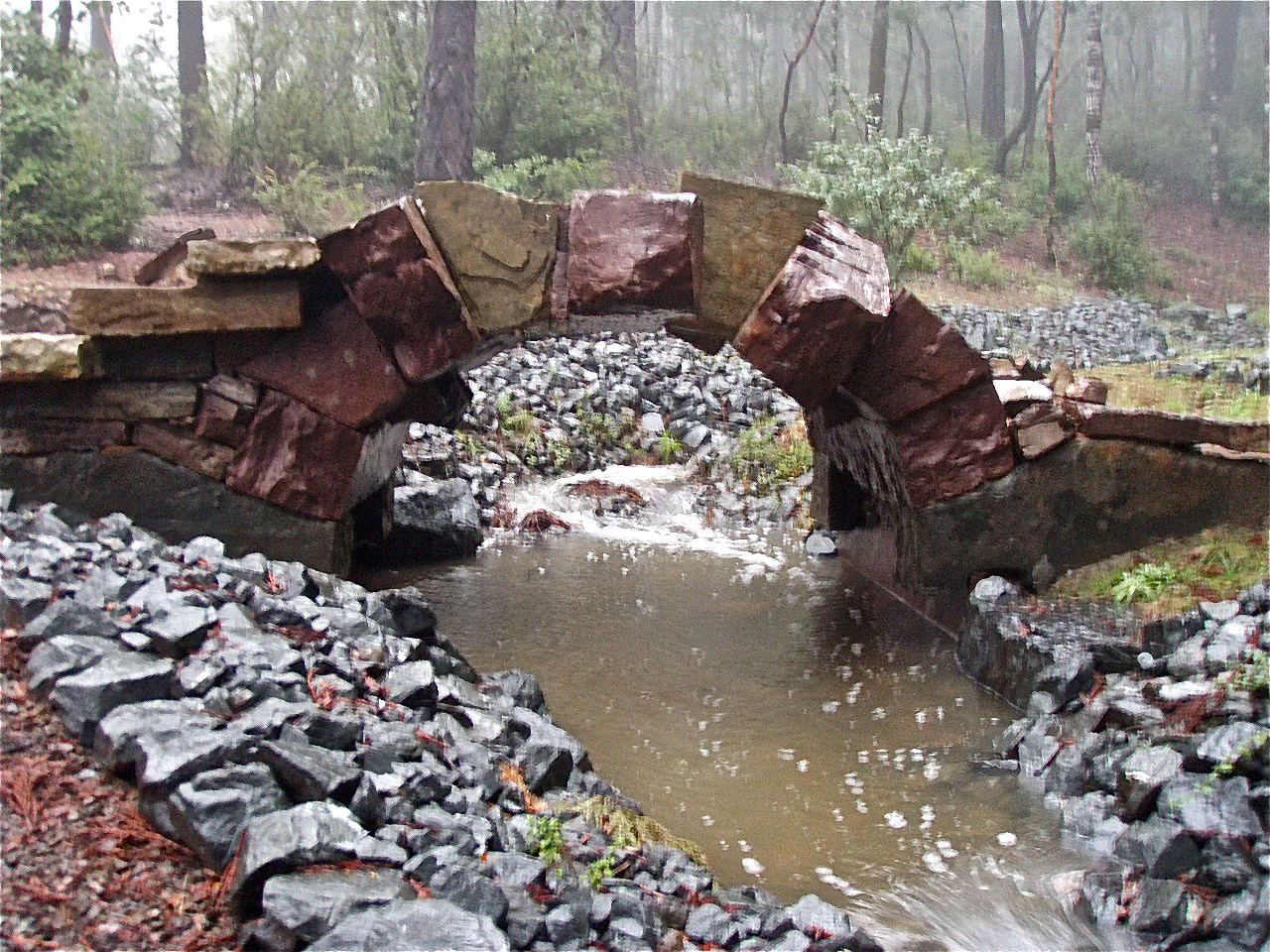 When your arch is ready you can carefully start to apply load. In fact, you must apply load to encourage regrowth of healthy bone, cartilage, ligament, tendon, fascia, nerves, blood vessels, and muscle. That’s the deal. Biological systems respond to load, but this has to be timed perfectly, and only you will know how much and when.
- When you, yes you, are ready, after considering the advice of your surgeon, physical therapist and other movement advisor (I recommend Feldenkrais and Continuum, as you know), start your training.
- What would FitOldDog do when he was ready to start training to run again after a Lisfranc injury and surgical repair?
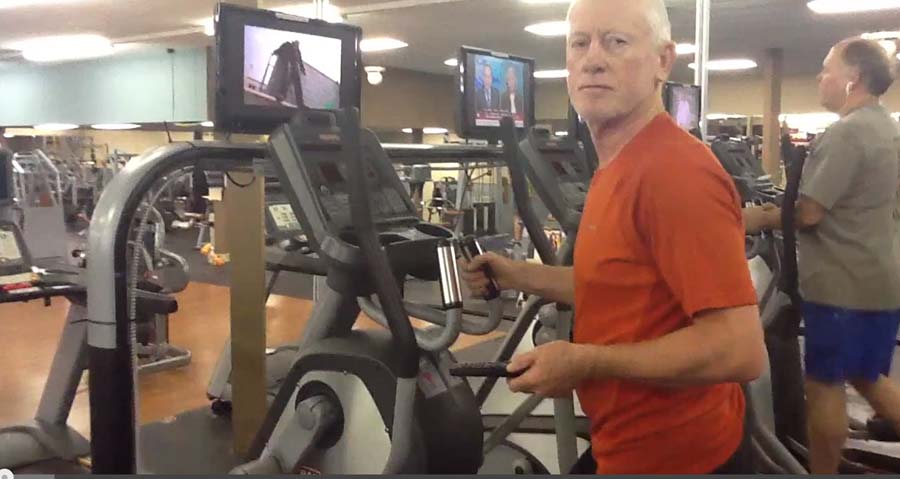 I would put in place a careful program, moving through (1) water running off of the bottom of the pool, (2) elliptical trainer (avoid all strain on my arch, essentially working from my heels), (3) zero-load stationary bike, (4) increasingly strong walking, avoiding any painful use of my arch, and possibly using Hoka One One shoes, if they felt right, (5) gentle arch activation exercises, over a period of months, some of which you can see in our Plantar Fasciitis Treatment Product video set [just write or tweet and I'll send you a free download code if you have Lisfranc], (6) water running gently brushing the bottom of the pool, until (7) finally running on a soft track. I’m not sure I would return to running trails for years!!!
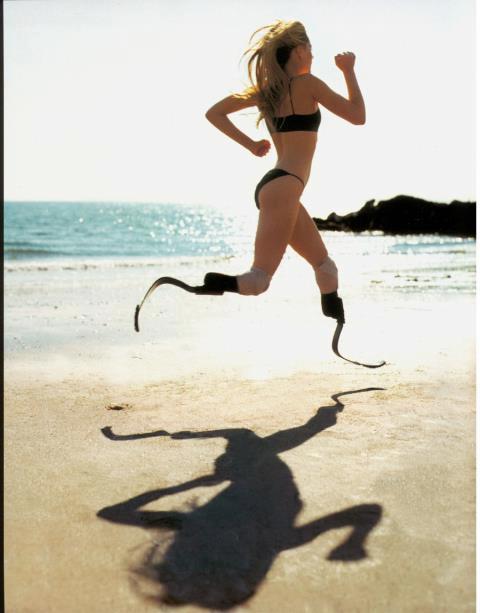
Look for inspiration out there in the world when you’re down. I was dropped in the Lubbock Half Ironman a few years ago by a young man with one of these foot prostheses. We were both suffering, but he smiled as he went by - it made my day!
- I would do all of this with the best physical therapist in the world, if I could track her or him down, and I would do it using the arch supports they recommend, but which feel right to me.
- When I felt hard done by I would look out into the world for inspiration, and it wouldn’t take long to find it.
- And finally, I would breath a sigh of relief, and enjoy whatever the hell I managed to do, whether it was running or not.
Let me know if you want further thoughts, as this is a tough but fascinating one.
Kind Regards,
Important Note: These posts do not provide medical advice. You should always consult your physician before undertaking or significantly modifying an exercise program.
Copyright © 2010 Kevin T. Morgan aka FitOldDog, Old Dogs in Training, LLC.
Post Footer automatically generated by wp-posturl plugin for wordpress.