Click image for link to article.
Hi folks!
Painful as pain is, it’s here to protect us from ourselves. Just ask someone with leprosy. Post-surgical repair, that’s fine.
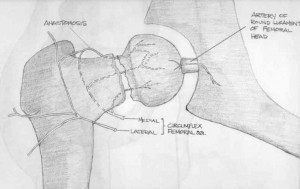
It pays to understand the Biology of the region of injury, so study is good.
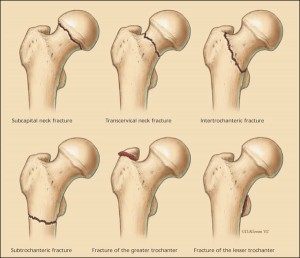
Today I received a tweet from a cyclist that I admire, Luis, asking for my thoughts on recovery from a subcapital hip fracture (broken neck of femur, where it enters the hip joint), but with no pain. Yep! He fell off of his bike - these things happen. The absence of pain is significant, and also dangerous in my opinion, as he may apply more pressure to the joint than is wise. So here, in a nutshell, is my advice:
- Do NOT put any stress on the joint until a physician says you may, and even then hesitate until you’re sure they are correct. My biggest worry would be damaging the blood supply to the femoral head. But then again, bones are much more alive and malleable than we tend to think.

Stacey is recovering from spinal surgery, and she has a great attitude to the pain and discomfort - she’s wearing a bone growth stimulator, by the way.
- Make sure you have the best medical support you can find. The fact that you’re having gammagraphy makes me think your medical team is in touch with the latest methods - I know little or nothing about gammagraphy, I hasten to add.
- Understand the diagnosis, including the mechanics of the femoral neck, as this will determine your approach to rehabilitation down the road.
- Be patient, which is extremely difficult, as I know only too well. But don’t be patient with poor medical treatment or anything that could lead to a frozen hip joint.
- I suspect that gentle exercises in the pool, once the bone is stable (not yet!), would be the best place to start, but a good physical therapist (preferably from sports medicine) is critical for guidance through recovery.
- Research the latest approaches to bone growth and repair - my friend was wearing a bone growth stimulator after her neck surgery, so things have obviously progressed since I was in veterinary clinical medicine back in the late 1960s. Whether this works for the femoral head I’ve no idea, but speedy bone repair is important.
- Then, when all that is over, you’ll need a careful plan for return to activity, for which I recommend that you start with the study of Feldenkrais, which is skeletally oriented.
Those are my initial thoughts on your condition. I cross my fingers for a good outcome on the gammagraphy, the location of the fracture, and it’s repair.
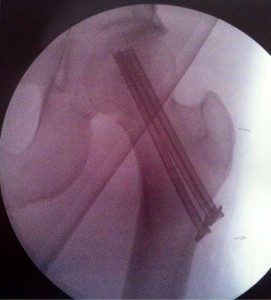
Post-surgical image of Luis’s hip repair. Looks solid. How long ago, I wonder?
When I wrote all that I didn’t know Luis had completed a surgical repair. He just sent me the image, minutes ago. No pain at this stage is good. I recommend slow and steady physical therapy, but I’m interested in people’s experience out there, especially triathletes.
Being as fit as you are will most certainly help your return to normal life, Luis.
Oh! Yes!
Check out SlowTwitch for other’s experience.
Take care!
-k @FitOldDog
Important Note: These posts do not provide medical advice. You should always consult your physician before undertaking or significantly modifying an exercise program.
Copyright © 2010 Kevin T. Morgan aka FitOldDog, Old Dogs in Training, LLC.