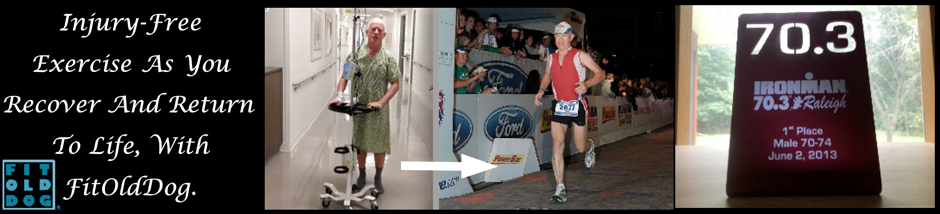

The best defense against exercise-induced injury, especially post-surgically, isn’t your surgeon, isn’t your doctor, isn’t your coach, isn’t your mother, it’s your mind, with which you will choose what to do, whom to trust, when to push, and when to back off.
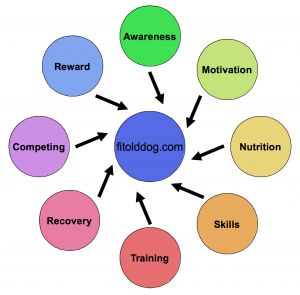
The FitOldDog Training Wheel sums up my exercise philosophy, whether you are an athlete or not. Start at the top, and go clockwise, whatever your challenge.
Question from a reader on a comment stream of this blog:
“Kevin,
I recently had both surgery to repair a hernia, as well as prostate surgery. Because of decreased capacity because of the hernia as well as the trauma of the two surgeries, I have lost a fair amount of muscle mass, strength, and tone. What kind of training regimen do you suggest for me to get back in shape? What exercises should I avoid to let my lower abdominal wounds heal completely (which could well take over 6 month to a year)? What kinds of exercises would be good? I have also lost some weight. What kind of a diet would be good as I recover?
Thanks,
Byron”
Hi folks, welcome.
Bear with me, I can’t address this one in a sound byte or tweet!
I love it when people ask questions about training after surgery because they make me think, and this is a doozy. I can only scratch the surface of the subject, but I’ll do my best. First some general comments about safe exercise for better health:
- No one can tell you exactly what to do, as they can’t be watching you all the time, but guidance should be sought from your surgeons, other health professionals, training partners, coaches, nutritionists, and even family, before you start a workout plan.
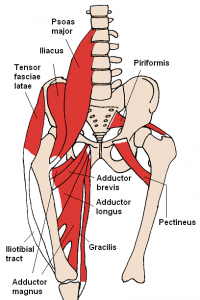
Learn the relevant anatomy of your body, so that you understand what is going on. A wealth of anatomical information is available on the Internet.
- Developing a solid sense of body awareness is critical when attempting optimal recovery, whilst avoiding exercise-induced injury. This is why the FitOldDog Training wheel places this at the starting point of a training program. If you are out of touch with what your body is saying to you, how can you avoid injuries?
- There are three phases to the process, (1) rehabilitation from surgery, (2) returning to your base level of training, and (3) moving beyond your base to improved physical fitness (if you so desire). Your base is your underlying level of general fitness and neuromuscular conditioning. For instance, if you played the piano for 5 years as a kid, and then dropped it, the underlying conditioning sits there waiting. Then you decide at age 50 to take up the piano again, and you will rapidly get back to where you were as a kid, or close to it. If you had never played you would have a much harder time. For instance, I was an avid swimmer as a teenager, including 10 years of water polo, I biked a lot to get around, but I never ran. If you follow my current Training Diary, you will note that my swim came back to a solid 5,000 yards in a month or so, I hit a good 100-mile bike ride after 3 months, but getting my run back on track is like pulling teeth - it’s all a matter of base (historical) neuromuscular training or body memory. You need to take this into account as you set your exercise goals - I can’t do this for you!
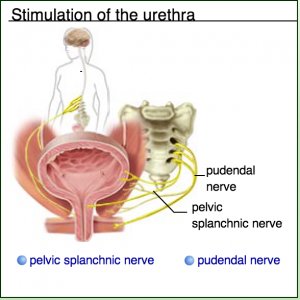
Understand how your bladder works, as it will encourage you to be consistent with your Kegel exercises - understanding always helps resolve, don’t you think?
Guarding, or chronic psychosomatic tension, resulting from previous injuries should be taken into account. Such issues can result in exercise or training injuries due to impaired biomechanics. For instance, guarding a broken ankle for 40 years caused me serious knee problems when running, and it was finally fixed by my Feldenkrais instructor, Karen - body awareness at work.
- The guarding reflex is critical in your specific case, so the use of Kegel exercises should be explored - I do them every time I pee (I’m a 70-year old male), and they really help.
- You are responsible for understanding the mechanics of your surgery in order to assess the appropriate duration of rehabilitation, and avoidance of risky activities, before undertaking exercise designed to take you back to your base training level. I’ve had my abdominal aortic aneurysm stent graft for about 3.5 years, and I consider the benefits and risks of exercise in relation to the stability of this device every time I exercise. You need to do the same for your particular surgical invasions.
- It is critical to remain limber, so develop a simple stretching routine to follow after each workout. This is REALLY IMPORTANT if you wish to avoid injuries!
Remember, I can give advice, which you should also seek from health and fitness professionals as you see fit. But you make the call when you lift a weight, walk or run, swim, or undertake whichever activities you select.
Don’t underestimate the importance of body awareness, as I demonstrate in this short video - there are many such videos on YouTube, just search under ‘Feldenkrais.’ For free access to our other body awareness videos, go to the FitOldDog Video Store, and use the Promo Code ‘Rebecca.’
Build exercise into your life-style or you will ‘fall off the wagon’.
More direct responses to Byron’s questions
“What kind of training regimen do you suggest for me to get back in shape?”
Rehabilitation Phase: I would take things very carefully, especially in my pelvic region, for up to three months (NOTE: the WebMD, who generally gives great advice, says, with respect to laparoscopic inguinal hernia repair, that you can start more strenuous exercise after four weeks - I wouldn’t, but again, it’s your call).

It is also important to relax for optimal recovery, so enjoy some lovely trail walks as part of your plan.
When it comes to the transurethral prostate repair, I’ve read that you should abstain from sexual activity for four weeks. Otherwise this is less of an issue than the hernia when it comes to exercise, apart from the obvious advantage of doing regular pelvic floor (Kegel) exercises for bladder control. My approach for your situation, were it me, would include, (a) use of stool softeners to avoid risk of the need to strain, (b) minimize pelvic rotation and hip flexion when lifting, and leave heavy lifting to others, (c) not let my bladder become over-full prior to exercise, (d) attempt to minimize intra-abdominal pressure by breathing when I do have to lift things, (e) take lots of walks with the dog, of increasingly long duration, (f) study the art of body awareness through Feldenkrais, and (g) stay aware of any activities that seem to strain the region of the hernia repair in order to avoid them. Recovering from surgery is like running in a new car - going easy at first pays dividends later.
Always warm up prior to exercise, be it aerobic or strength training.

I wouldn’t go near any heavy equipment, such as this leg press machine, for quite some time. Six months at least.
Where to start, as wide range of exercise philosophies exist?
My recommendation is that you design a workout program that you enjoy or you’ll give it up, for sure?
If you have never really been into physical fitness, consider 3 x 1 hour workouts per week, with 30 min aerobic training (brisk walking, elliptical machine, swim, or what you enjoy) and 30 min of strength training, or weight lifting. The ONLY way to set this up correctly is for you to go to a gym, with an experienced friend or trainer, and build a program that includes the use of excellent form. The mirrors are there for this very reason, not to admire yourself, but you can if you like.
Always respect the 10% rule.
“What exercises should I avoid to let my lower abdominal wounds heal completely (which could well take over 6 month to a year)?”
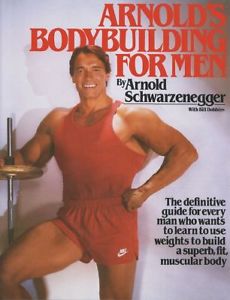
When it comes to weight training, whether you are a body builder or not, good form is critical, so learn from the best.
I would avoid anything that puts a heavy load on your pelvic area, such as lifting too many groceries at once, exceeding more than 10 to 15 lbs in the gym, or straining whilst using the bathroom. A weight program is excellent for building muscle and bone mass, and can even be used for aerobic training if you superset (moving between two exercises without a rest - e.g. I go from biceps to triceps, or quads to hamstrings this way). To build stronger bones, weight training, if combined with good posture, can work wonders. Once again, avoid heavy weights for at least a few months. I would also avoid the rowing machine for about 6 months, and use the elliptical trainer for warm ups during the base-building phase. An excellent thing to do, while you rehab, would be to buy a book on weight training, and learn what it’s all about - I used to read those by Arnold Schwarzenegger, and I still think he was one of the best. You probably don’t want to become a body builder, but these guys really know their stuff when it comes to weight lifting correctly.
“What kinds of exercises would be good?”
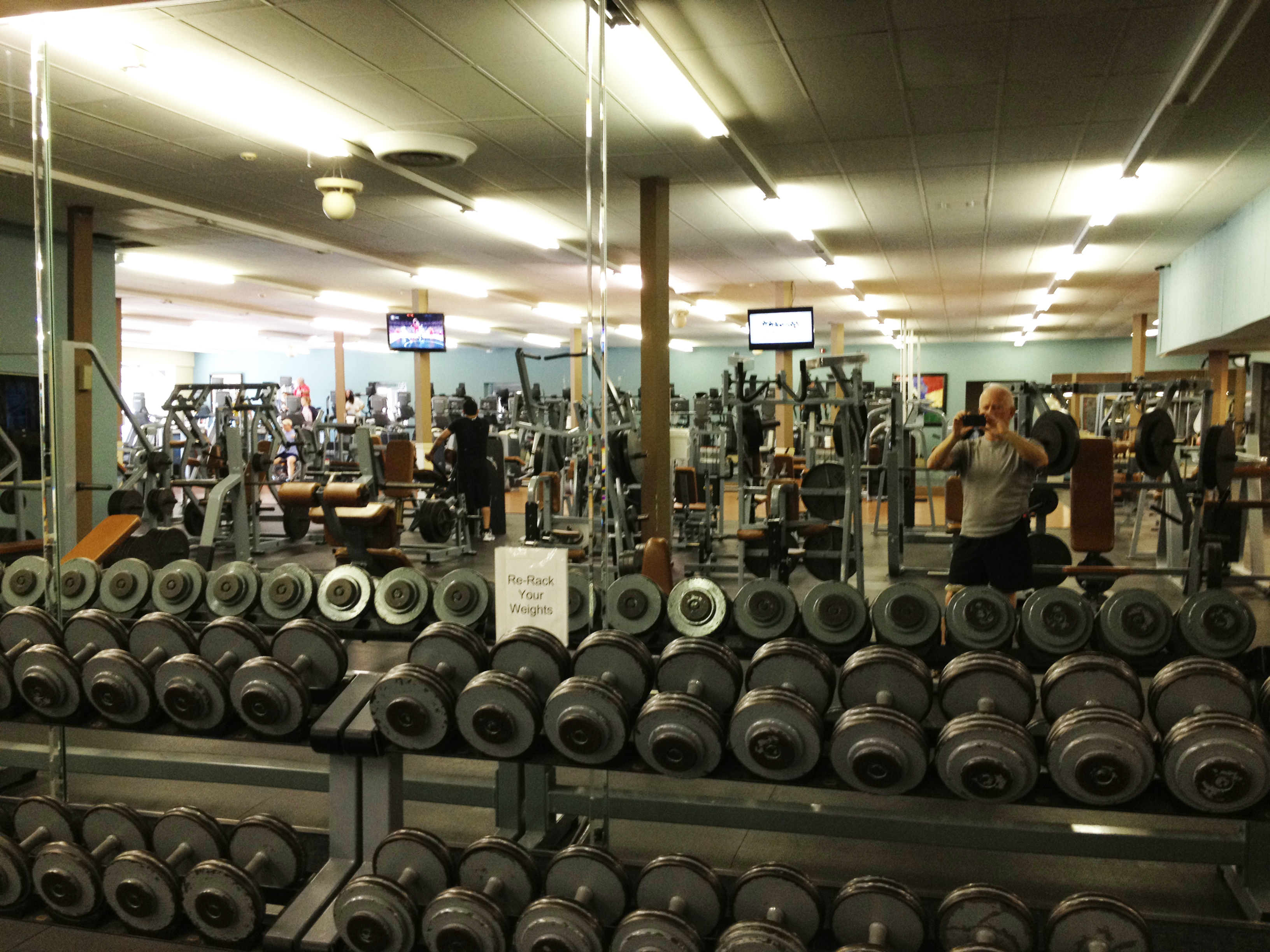
Use the mirrors for form, be polite to others, but otherwise ignore them, stick to the lightest of light weights until you know what you are doing - 10 to 20 reps 3x for each exercise, once you work up to it. Shouldn’t be very sore the next day, just a little.
Once rehabilitation is over, learn a standard weight training set for strength, and create a simple aerobic exercise plan. I like the weight training plan linked here for it’s simplicity, but substitute safe exercises for his squats, dead lifts and military press - e.g. leg raises in a quad machine and careful use of a suitable hamstring machine (sitting version preferably - get advice from staff in your gym). I repeat, use good form to take any strain off of your pelvis and lower back. If you start with the lightest of light weights, you’ll soon understand. If in doubt, ask specific questions on the comment stream to this post. I’ve been lifting for years, but I’m not an expert!!
“I have also lost some weight. What kind of a diet would be good as I recover?”

You could try making a Paleo Shepherd’s Pie. I made this one using the Whitney Dane mashed potato (cauliflower and horseradish) recipe. Yum!
During rehabilitation eat anything that looks good, but not processed junk. Your body knows best if you listen - if it wants a steak, give it a steak, even if you’re a vegetarian. For back to base level exercise, move to the Paleo diet, it’s the best as long as you know when to substitute with carbs. Basically, no pasta, bread, potatoes or rice, plenty of protein in the form of fish and meats, including the fat especially, lots of salads and veggies, with one serving of fruit per day, largely as berries, plus nuts (Macadamias are best, I think) as a snack. Simple and tasty!
When it comes to moving beyond your base fitness level, get back to me in a year.
Please send any questions you might have, as I could have written a book on the answers, but I cobbled together this blog post instead.
Wishing you a healthy recovery and enjoyable workouts.
Kevin aka @FitOldDog
Important Note: These posts do not provide medical advice. You should always consult your physician before undertaking or significantly modifying an exercise program.
Copyright © 2010 Kevin T. Morgan aka FitOldDog, Old Dogs in Training, LLC.
Post Footer automatically generated by wp-posturl plugin for wordpress.